
Building a new habit sounds simple at first. You set a goal, feel motivated, make a plan, and promise yourself that this time will be different. But after a few days, real life gets in the way. You forget, lose discipline, break the routine, or stop tracking your progress.
That is why so many people search for Steps to create a habit that are practical, realistic, and easy to apply. The goal is not to depend on motivation every day. The real goal is to build a system that helps you repeat the right action until it becomes part of your routine.
In 2026, personal productivity is less about doing more and more about tracking what matters. Research on habit formation shows that habits are built through repeated actions in stable contexts, until the behavior becomes more automatic over time.

Start tracking your habits with Habittube
If you want to move from intention to action, try Habittube Flow. The app helps you track habits, see your progress, build consistency, and simplify your daily routine without needing a complicated system.
1. Choose one specific habit, not a vague goal
The first step is to turn a general intention into a clear action.
Instead of saying:
“I want to be healthier.”
Say:
“I will walk for 20 minutes after breakfast.”
The second version is easier to track because it is specific, measurable, and connected to a real moment in your day.
This is one of the most important Steps to create a habit because vague goals are hard to repeat. Clear actions are easier to complete.
Examples:
- Read 10 pages every night.
- Drink a glass of water after waking up.
- Exercise for 15 minutes before work.
- Write three ideas before bed.
- Meditate for five minutes after breakfast.
2. Start small to reduce resistance
A new habit should be so easy that you can do it even on a busy day. The goal at the beginning is not intensity. The goal is repetition.
If you want to exercise, start with five minutes. If you want to read, start with one page. If you want to clean your room, start with one drawer.
Small actions reduce friction. They make it easier to begin, and beginning is usually the hardest part.
The best Steps to create a habit are not based on massive overnight change. They are based on small actions repeated consistently.
3. Attach the habit to an existing routine
One of the easiest ways to build a habit is to connect it to something you already do.
For example:
- After I brush my teeth, I will drink water.
- After I make coffee, I will write my top priority.
- After lunch, I will walk for 10 minutes.
- Before bed, I will track my habit progress.
This works because your existing routine becomes the reminder. Research on context stability shows that repeating behavior in stable contexts can increase automaticity and support habit building.
4. Create a clear cue
Every habit needs a trigger. A cue can be a time, place, previous action, object, or situation.
Examples of cues:
- When I wake up.
- After breakfast.
- When I sit at my desk.
- Before I open social media.
- Before I go to sleep.
A clear cue tells your brain when to begin. The American Psychological Association has highlighted habit science showing that everyday behavior is often shaped by repeated contexts and environmental patterns, not only conscious willpower.
That is why cue design is one of the most practical Steps to create a habit.
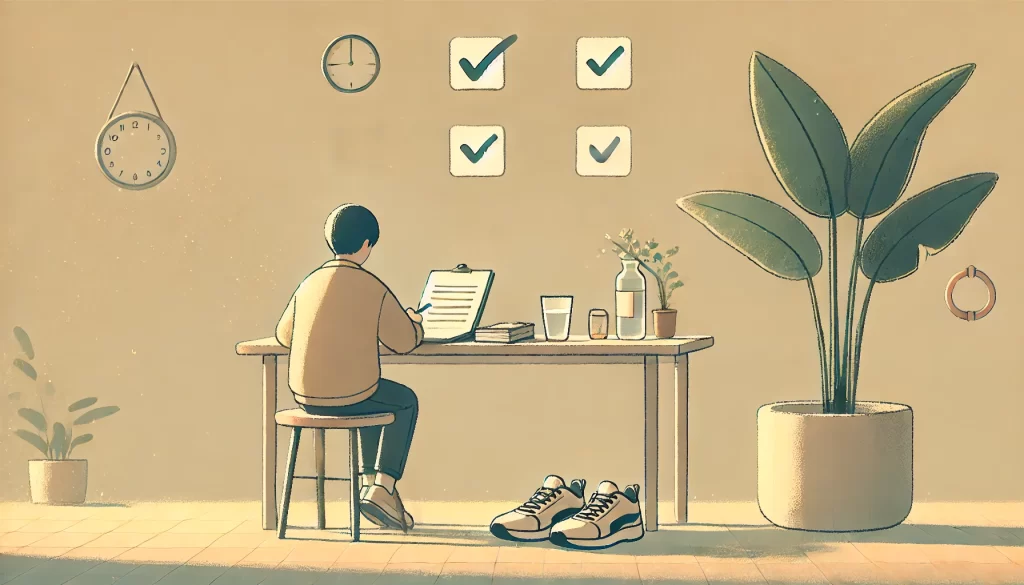
5. Make the habit visible
What you do not see is easy to forget. If you want to build better habits, make the action visible.
You can use:
- A habit tracking app.
- A checklist.
- A calendar.
- A reminder.
- A sticky note.
- A visible object related to the habit.
If you want to exercise in the morning, leave your workout clothes ready the night before. If you want to read, place the book on your pillow. If you want to drink more water, keep a bottle on your desk.
Visibility reduces forgetfulness and makes the habit easier to start.
6. Track your habit every day
Habit tracking is where intention becomes evidence. You are no longer guessing whether you are consistent. You can see it.
Tracking helps you:
- Measure progress.
- Notice patterns.
- Build discipline.
- Stay accountable.
- Recover after missed days.
- Understand what is working.
- Avoid relying only on memory.
This is one of the Steps to create a habit that many people skip. But without tracking, it is easy to feel productive while missing the habit more often than you realize.
7. Focus on progress, not perfection
Many people quit because they miss one day and think they failed. But habits do not require perfection. They require returning to the system.
If you miss a workout, return tomorrow. If you forget to read, restart the next day. If your routine breaks, do not turn one missed day into a full reset.
A good habit system helps you see long-term progress, not just perfect streaks.
8. Design your environment
Your environment can support your habits or sabotage them.
If you want to eat better, make healthier food easier to access. If you want to study, remove distractions from your desk. If you want to sleep better, keep your phone away from your bed.
Habits are not isolated actions. They live inside routines, spaces, triggers, and repeated contexts.
Designing your environment is one of the most effective Steps to create a habit because it reduces the need for constant willpower.
9. Use simple rewards
A reward tells your brain that the action was worth repeating. It does not need to be big.
Simple rewards include:
- Marking the habit as complete.
- Watching your streak grow.
- Taking a short break.
- Reviewing weekly progress.
- Sharing progress with someone.
- Celebrating a full week of consistency.
The reward should support the habit, not work against it. For example, rewarding exercise with unhealthy overeating may weaken the habit you are trying to build.
10. Review and adjust every week
A habit plan does not always work perfectly on the first try. Maybe the time is wrong, the habit is too big, or the routine does not fit your real life.
That is why the last of these Steps to create a habit is weekly review.
Ask yourself:
- Which habit did I complete most often?
- What got in the way?
- Which cue worked best?
- Was the habit too difficult?
- What should I make easier?
- What should I change next week?
Discipline improves when you get feedback. Tracking gives you that feedback.

The real problem: why most people fail to build habits
Most people do not fail because they lack ambition. They fail because they do not have a system.
Common reasons include:
- No habit tracking.
- No clear cue.
- No visible reminder.
- Too many goals at once.
- Habits that are too difficult.
- Inconsistent routines.
- Forgetfulness.
- No progress review.
- Depending only on motivation.
This is why the best Steps to create a habit focus on structure, repetition, and tracking, not just motivation.
How Habittube helps you build consistency
Habittube Flow is designed to make habit building easier, clearer, and more practical. It is not just theory. It gives you a simple way to track what you do every day.
With Habittube Flow, you can:
- Track daily habits.
- See visible progress.
- Build consistency.
- Simplify your routine.
- Notice which habits you complete most often.
- Recover after missed days.
- Turn goals into measurable actions.
The value of using a habit app is that you do not have to depend only on memory or motivation. You have a clear place to see progress and keep moving.
Practical examples of habit tracking
Example 1
Sarah wants to improve productivity. Instead of changing her entire day, she starts with three simple habits:
- Wake up at the same time.
- Drink water.
- Write her main priority for the day.
Each morning, she tracks her progress in Habittube Flow. After two weeks, she can see which habits are becoming consistent and which ones need adjustment.
Example 2
Daniel wants to work out but usually quits after a few days. This time, he starts with 10 minutes per day and tracks every session.
Because his progress is visible, he feels more motivated to continue. He is not focused on perfect workouts. He is focused on building consistency.
Example 3
Emma wants to read more. Her starting habit is reading five pages before sleeping. Every night, she marks the habit as complete.
After one month, she has not only read more. She has also created a calmer nighttime routine.
Example 4: improving discipline with small wins
Michael wants more discipline but feels overwhelmed. He starts with one habit: planning tomorrow before bed.
The habit takes three minutes. Because it is easy, he completes it most nights. Over time, that small win improves his organization and confidence.
Conclusion
The best Steps to create a habit are simple, measurable, and repeatable. You do not need to transform your entire life in one week. You need one clear action, a stable cue, a supportive environment, and a system for tracking progress.
Motivation may help you start, but tracking helps you continue.
In 2026, building better habits requires more than good intentions. It requires visibility, consistency, and feedback. That is why a practical tool like Habittube Flow can help you turn goals into real habits you can measure and maintain.
Visit habits.habittube.io for more guides on habits, productivity, discipline, routines, and habit tracking.
 You can Talk with Tubby, your AI assistant to improve your habits
No Responses