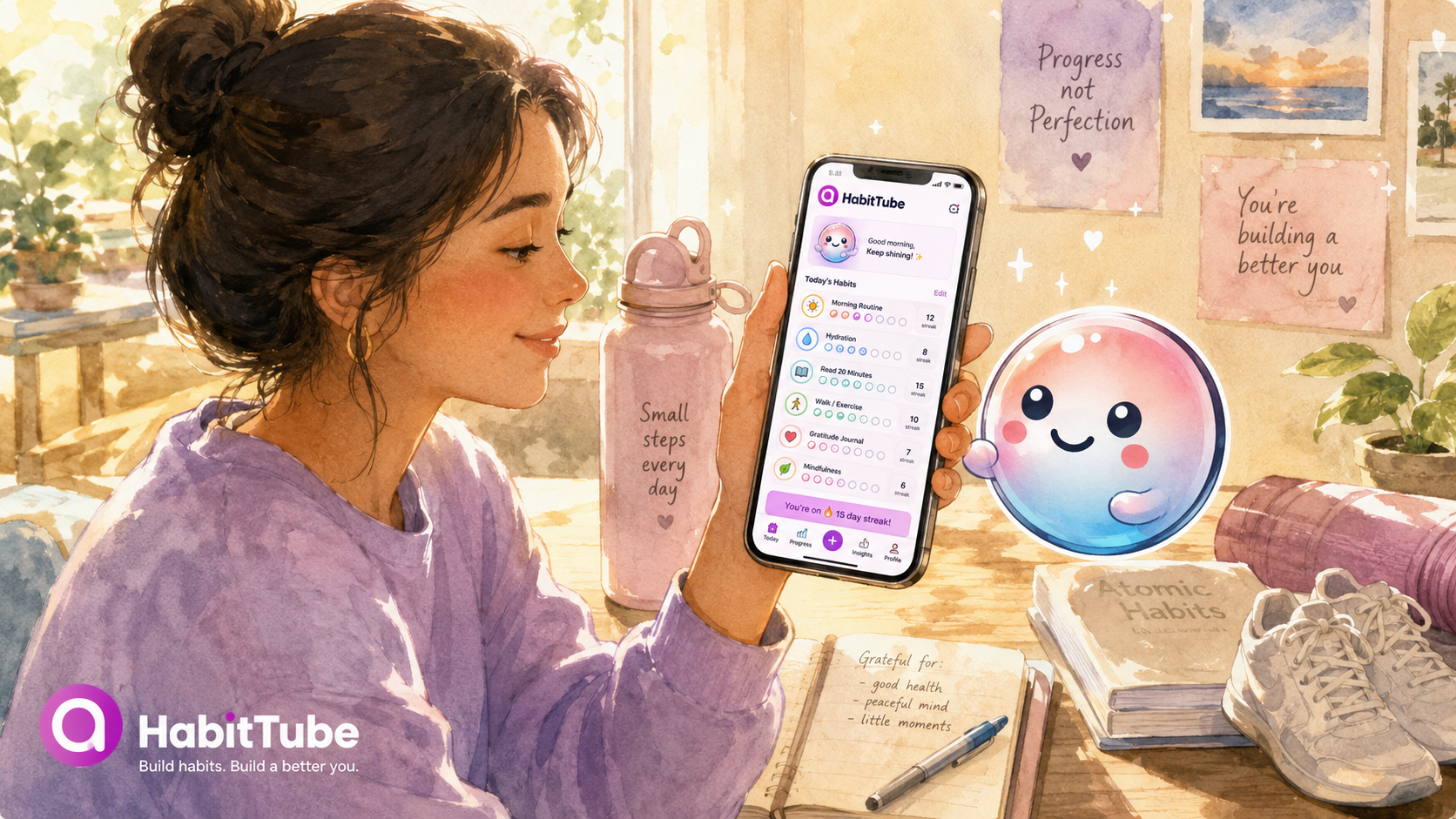
Many people search for How to learn to be disciplined because they start with motivation but struggle with consistency. They want to exercise, study, wake up earlier, save money, read more, or improve productivity, but daily life gets in the way. The truth is simple: discipline is not only about willpower. It is built through habits, routine, tracking, and small actions repeated over time.
Try Habittube Flow, a web app designed to help you track habits, measure progress, and build consistency without making your routine complicated. It helps turn goals into visible daily actions.
1. Start with one small habit
The first step in How to learn to be disciplined is choosing one small habit instead of trying to change everything at once. Start with something easy: read for five minutes, walk for ten minutes, drink water after waking up, or write down your top three tasks.
Small habits reduce friction. A review on habit formation published by the National Library of Medicine explains that simple, sustainable behavior changes are easier to repeat and maintain over time. Read the habit formation review.
2. Build a fixed routine
A routine makes discipline easier because it removes daily decision-making. Instead of saying “I will be more productive,” define exactly when and where the action will happen.
For example:
- After breakfast, plan your day.
- At 7:00 a.m., stretch for five minutes.
- Before bed, track your habits.
If you want How to learn to be disciplined, stop relying on vague intentions and start using a structure.
3. Use visible reminders
People often fail because they simply forget. Reminders make your routine easier to follow. Use a calendar, alarm, sticky note, or habit app.
The American Psychological Association has shared research-based insights on how habits are shaped by repeated behavior and stable contexts. See APA’s resource on habits.

4. Track your progress every day
Habit tracking is one of the most practical answers to How to learn to be disciplined. When you track your actions, you make progress visible. You stop guessing and start seeing what is actually happening.
You do not need to track everything. Choose three important habits and record whether you completed them each day. The goal is awareness, not perfection.
5. Make the habit easier to do
Discipline improves when your environment supports the behavior. If you want to read, leave the book on your desk. If you want to work out, prepare your clothes the night before. If you want to focus, keep your phone away while working.
This matters because How to learn to be disciplined is not only about effort. It is also about designing your environment so the right action becomes easier.
6. Review your failures without quitting
Missing one day does not destroy your progress. The real problem is stopping completely. When you fail, review what happened and adjust.
Ask yourself:
- Was the habit too difficult?
- Did I forget?
- Was the time unrealistic?
- Do I need a smaller version?
This is a key part of How to learn to be disciplined: learn from mistakes without turning them into excuses.
7. Use a habit app to stay consistent
A habit app helps centralize your goals, routine, and progress. Instead of depending on memory, you get a simple system that shows what you need to do and what you have already completed.
James Clear explains that a habit tracker is a simple way to measure whether you completed a habit and create a visible record of consistency. Read his habit tracker guide.

The real problem: lack of tracking
Most people do not fail because they are lazy. They fail because they have no system. They forget, lose focus, start too big, or stop tracking their progress.
That is why How to learn to be disciplined cannot stay as theory. The key is daily follow-up. When you track habits, you know what is working, what is slipping, and what needs adjustment.
How Habittube Flow helps build discipline
Habittube Flow is built for habit tracking and consistency. It is not just a motivational idea or a long productivity method. It is a practical tool for turning goals into daily actions.
With Habittube Flow, you can:
- Create custom habits.
- Track daily completion.
- Measure visible progress.
- Organize routines.
- Reduce forgetfulness.
- Build consistency step by step.
- Keep your habits simple.
For anyone searching How to learn to be disciplined, the app makes the process easier because it gives structure, clarity, and progress tracking in one place.
Practical examples
Building a morning routine
A user wants to wake up earlier, drink water, and read. In Habittube Flow, they create three habits and track them each morning. After a few days, the routine becomes easier to repeat.
Daily habit tracking
A student searching How to learn to be disciplined can track study sessions, completed assignments, and sleep time. This makes productivity easier to measure.
Visible progress
A professional can use the app to track deep work, exercise, and screen-time limits. Seeing progress helps maintain discipline even when motivation is low.
Frequently asked questions
What is the first step in How to learn to be disciplined?
Start with one small habit, assign it a clear time, and track it every day. Discipline grows through repetition and visibility.
Is discipline the same as motivation?
No. Motivation can help you start, but discipline depends on routine, habit tracking, and consistent action.
How long does it take to build discipline?
It depends on the habit, the person, and the environment. Some habits take weeks or months, so tracking progress is more useful than expecting instant change.
Can a habit app really help?
Yes. A habit app helps reduce forgetfulness, measure progress, and keep routines organized. For How to learn to be disciplined, a simple tracking system is more reliable than memory alone.

Conclusion
How to learn to be disciplined is not about being perfect. It is about creating small habits, building a routine, tracking progress, and returning to the plan after mistakes.
Habittube Flow helps make discipline practical. By tracking habits daily and making progress visible, it gives you a simple system to stay consistent and improve your productivity one action at a time.
External Links:
- HabitTube: How to Learn to Be Disciplined — A practical guide to mastering discipline through clear routines, small habits, visual reminders, fixed schedules, and habit tracking.
- HabitTube: How to Become a Disciplined Person — A simple guide to building discipline with realistic goals, daily tracking, weekly review, and consistent small actions.
- Verywell Mind: How to Be More Disciplined — A wellness-focused guide on setting clear goals, removing distractions, starting small, finding accountability, and reviewing progress.
- Zen Habits: A Guide to Developing the Self-Discipline Habit — A practical approach to training self-discipline through focused practice, simple tasks, and repeated effort.
- BetterUp: Self-Discipline Guide — A complete guide to developing self-discipline through goal setting, prioritization, accountability, and mindset.
 You can Talk with Tubby, your AI assistant to improve your habits
No Responses